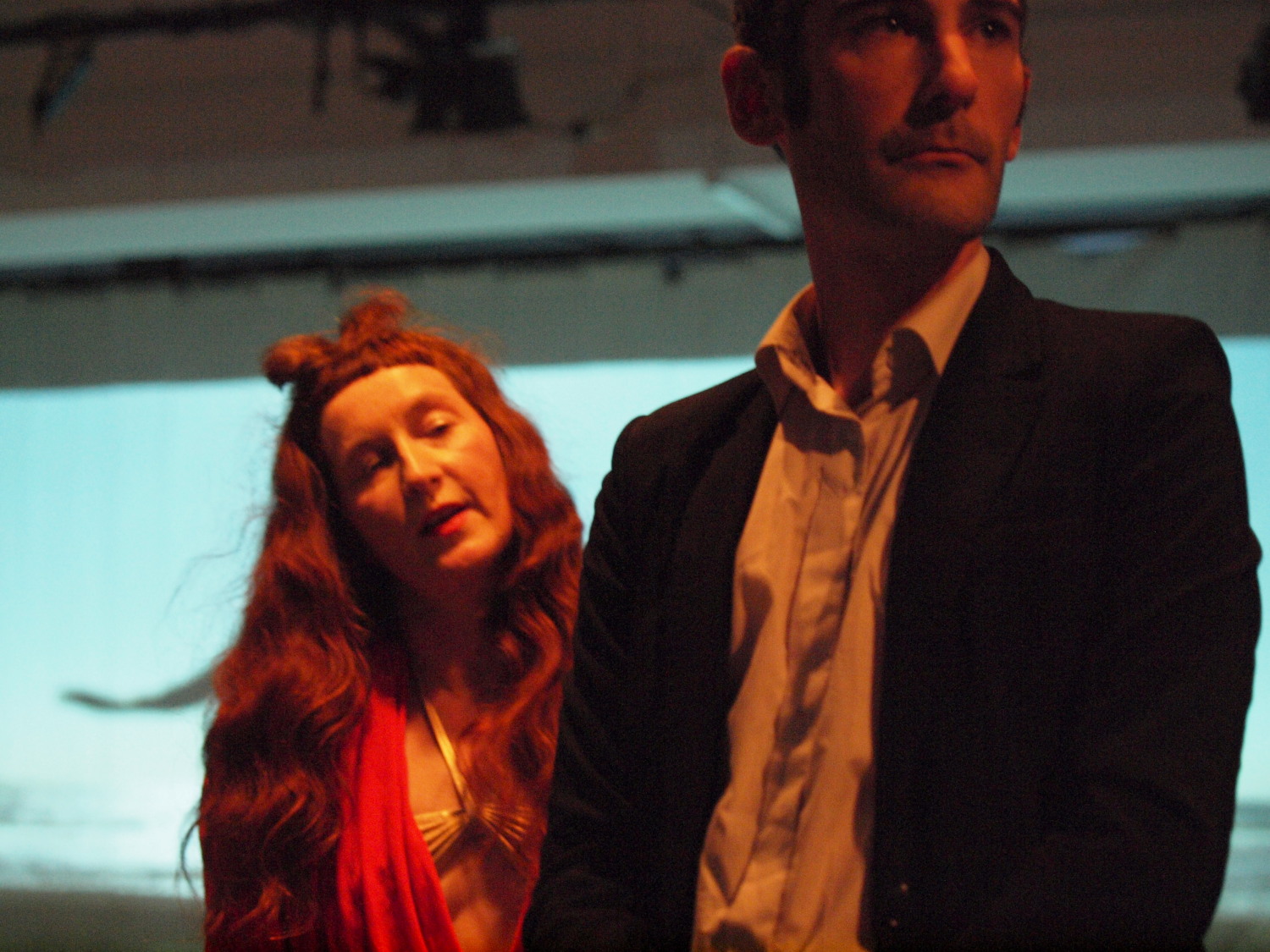
How to be a dead person of a drama?

On Georgia Sagri’s Antigone Model (3rd Edition)
Ongoing since 2010, July  4th, 2013, 15-21h, 3 ½ Kunstwerke, Berlin, Auguststraße 69

Georgia Sagris Antigone was a horse, a carriage-driver, a model on the cat-walk, she was sad, lame and laughing, also suffering and shaking, she became a siren, a porter, a messenger and a lover. She was beaten-down and she stood up; she died and rose again. She was also none of this at the edge of narcissism and forgetfulness. The intensity even increased during 6 hours, when sequences of every movement and image were repeated up to about 20 times. And there was no sign of fatigue. The performer’s talent for humor, show, playfulness, facial expression and body-language opened space and space of lives and fates.

A re-recording of the chorus of the ancient drama

Sagri sequenced the piece by returning to her electronic device to record her voice, clapping and stepping. Then she started again using dance, show, play and facial expression. And she found ways to bind together all aspects of her research on Antigone by her space-filling voice and sounds. She laughed, groaned, whinnied, cried and accompanied herself by the rhythm of her steps, clapping her hands on her body and moving the black-varnished iron elements of the installation, which she carried, to control the extension of the space in the space. Realizing the story of Antigone the threefold elements might also have personified Polyneikes and the members of Kreon’s family. However Sagri personified the dead in her performance in a way that the objects and she herself expressed a general idea of death – and life.
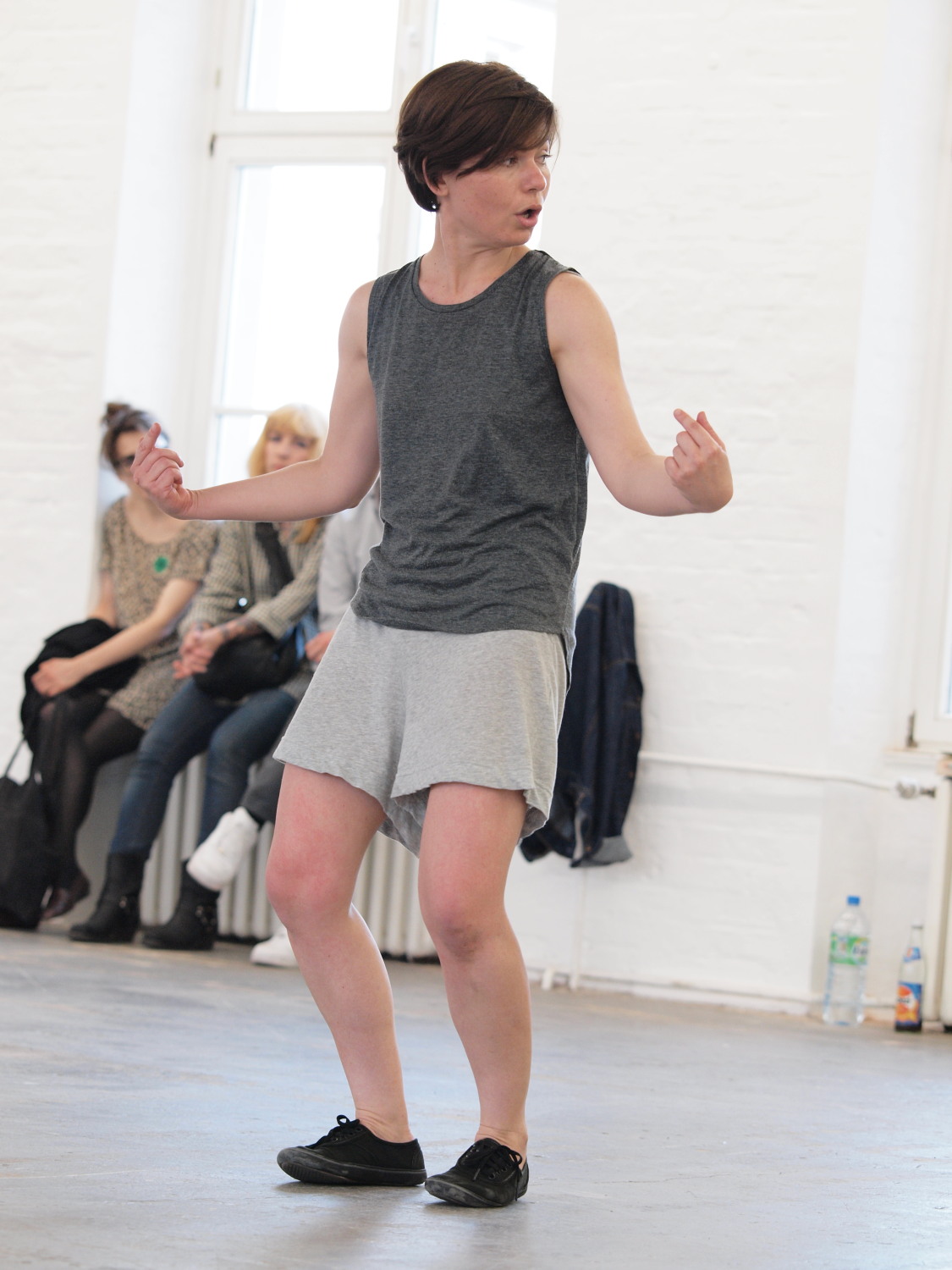
Georgia Sagri: Antigone Model,photograph: Johnicon; courtesy of the artist, Lars Friedrich and Melas Papadopoulos

Georgia Sagri: Antigone Model,photograph: Johnicon; courtesy of the artist, Lars Friedrich and Melas Papadopoulos

The sounds amplified the physical expressions. Extended by recorded passages of former sequences of the performance on a laptop, to which she returned frequently, single episodes became separated. As recorded and live sounds were often hard to distinguish actually past moments returned by the feedback she used. This dialogue between past and presence served as an entire element of the whole performance and connected the live event to the underworld. Thus the essence of Antigone’s motive to bury Polyneikes was actualized. Sagri’s minimal use of electronic equipment also simulated the chorus of the ancient drama in the sense that it became the accumulated choir of the dead. This created the impression of a meta-communication between the actual performance and the moments which have gone.
Eine Neueinsetzung des antiken Dramas

Georgia Sagri, Antigone Model (3rd Edition), Ongoing since 2010
Performance am 4. Juli 2013, 15-21h, 3 ½ Kunstwerke, Berlin, Auguststraße 69

Sagris Antigone war ein Pferd, eine Wagenlenkerin, ein Model auf dem Laufsteg, eine Trauende, eine Lachende, eine Leidende, eine Erschütterte, eine Gelähmte, eine Sirene, eine Trägerin, eine Botin, eine Liebende, eine Niedergeschlagene, eine Tote, eine Aufstehende, eine sich Erhebende, eine Darstellerin, aber auch – als zeitgenössische Performerin – nichts von alledem. Diesen ‚Parcours‘ aus Innen und Außen durchschritt sie zigmal während ihrer sechs Stunden langen Performance. Sie war die Ausdauernde: Mit Humor und Disziplin beschritt sie die Grenze zwischen Selbstverlorenheit und Selbstverliebtheit. So entfaltete sich eine Kraft aus Strenge und Lockerheit, welche die vielen Sequenzen bis zum Schluss bei steigender Intensität variierte. Dabei setzte die in New York lebende griechische Künstlerin Tanz, Show, Spiel, Mimik, Gestik und vor allem ihre Stimme ein. Lachen, Stöhnen, Ächzen, Wiehern und Weinen steigerten mit dem Rhythmus ihrer Schritte die Wirkung ihrer Performance bis zum Schluss.

Johnicon: Georgia Sagri, 4. Juli 2013, VG-Bild-Kunst, Bonn

Johnicon: Georgia Sagri, 4. Juli 2013, VG-Bild-Kunst, Bonn

Der Chorus aus dem Laptop

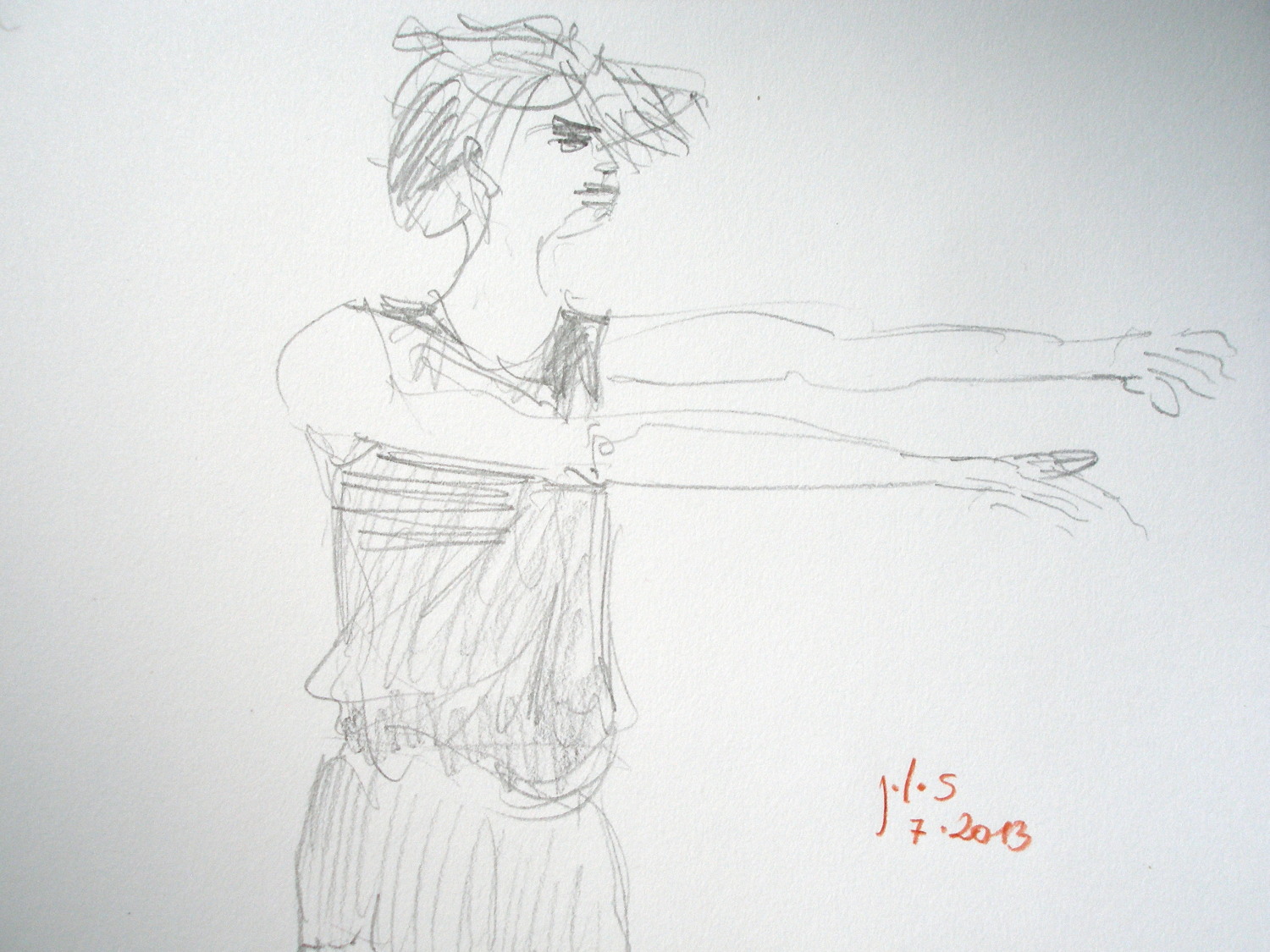
Die einzelnen Episoden gliederte sie durch regelmäßige Schleifen in dem 200 qm großen Ausstellungsraum der Kunstwerke, nach denen sie jedes Mal an ihren Laptop zurückkehrte, um aktuelle Klangsequenzen aufzunehmen oder zuvor gespeicherte einzuspielen. Auf diese Weise traten vorherige stimmliche und klangliche Äußerungen mit aktuellen in einen Dialog oder ergänzten sich chorisch. Oft verschmolz dabei Aufgezeichnetes und Aktuelles, so dass es schien, als würde der Chor des antiken Dramas hervortönen. Wenn man sich auf den Titel dieses Stücks besann, so konnte man glauben, die dem Untergang geweihten Gestalten der Tragödie von Sophokles hätten ihre Stimmen auf einer Festplatte hinterlassen. Es schien jedenfalls, als würden mit dem minimalen Einsatz elektronischer Mittel die Stimmen der Antigone aus dem Orkus gerufen, die Polyneikes gegen das Verbot Kreons bestatten wollte, um dort mit ihm wieder vereint zu sein. (Nach dem griechischen Glauben konnte nur bestattete Tote in den Orkus gelangen.) Ob live oder aus dem Off, es waren die Stimmen, die das Stück zu einem Ganzen banden und ihm eine Spannung gaben. Konserven würden diese Aktualisierung von verschiedenen Zeiten und Orten unter den Fußspitzen der Performerin löschen. Deshalb wird an dieser Stelle nur eine Skizze gezeigt, die ich als Rezensent nach der Performance aus dem Gedächtnis anfertigte. Sagri hat ein so ausdrucksvolles Gesicht wie eine Stimme und einen Körper, welche ihre Erscheinung von einem Augenblick zum nächsten wechselten.

Phasen der Ruhe zwischen einzelnen Bewegungssequenzen ermöglichten kaum eine Regeneration; denn es wurden jeweils Einstellungen der Sounds und ihre Positionierungen innerhalb des Raums vorgenommen. Die Wiederholung in Varianten bewirkte eine Einprägung bis hin zur Einfühlung. Noch Tage später echoten die Stimme, das Lachen, das Wiehern und die Bewegungen. Kurz gesagt: Diese Performance vereinte viele der Ansprüche, die heute von interdisziplinärer Arbeit gefordert wird, wobei dennoch der Körper als Instrument der Aktion und als Quelle des Sounds durchgehend präsent war und starke Suggestionen bewirkte.

Vagabonds of Art

The Capital of Performance Art

The 3rd edition of Month of Performance Art – Berlin ended last weekend. 47 locations presented more than 100 performances: site-specific, durational, indoor or outdoor, talks, workshops, screenings, public encounters and interactions, live acts and other formats and related projects. More than 170 international artists and participants as well as 23 associate curators.

This range of work and the public resonance again qualified Berlin as the world’s capital of performance art. Bloggers kept their readers informed at: www.mpa-blog.tumblr.com Please visit the official website www.mpa-b.org also for media partners and video documentation.

Reader, you have to be aware, that this Month of Performance Art – Berlin is an artist-lead, non-profit initiative of Joel Verwimp, Florian Feigl, Francesca Momana Ciardi, Nathalie Fari, Joern J. Burmester and Associated Curators, providing a platform for individuals, groups and collectives. Spirit and initiative makes it possible and it is not stoppable by the lack of public funding.


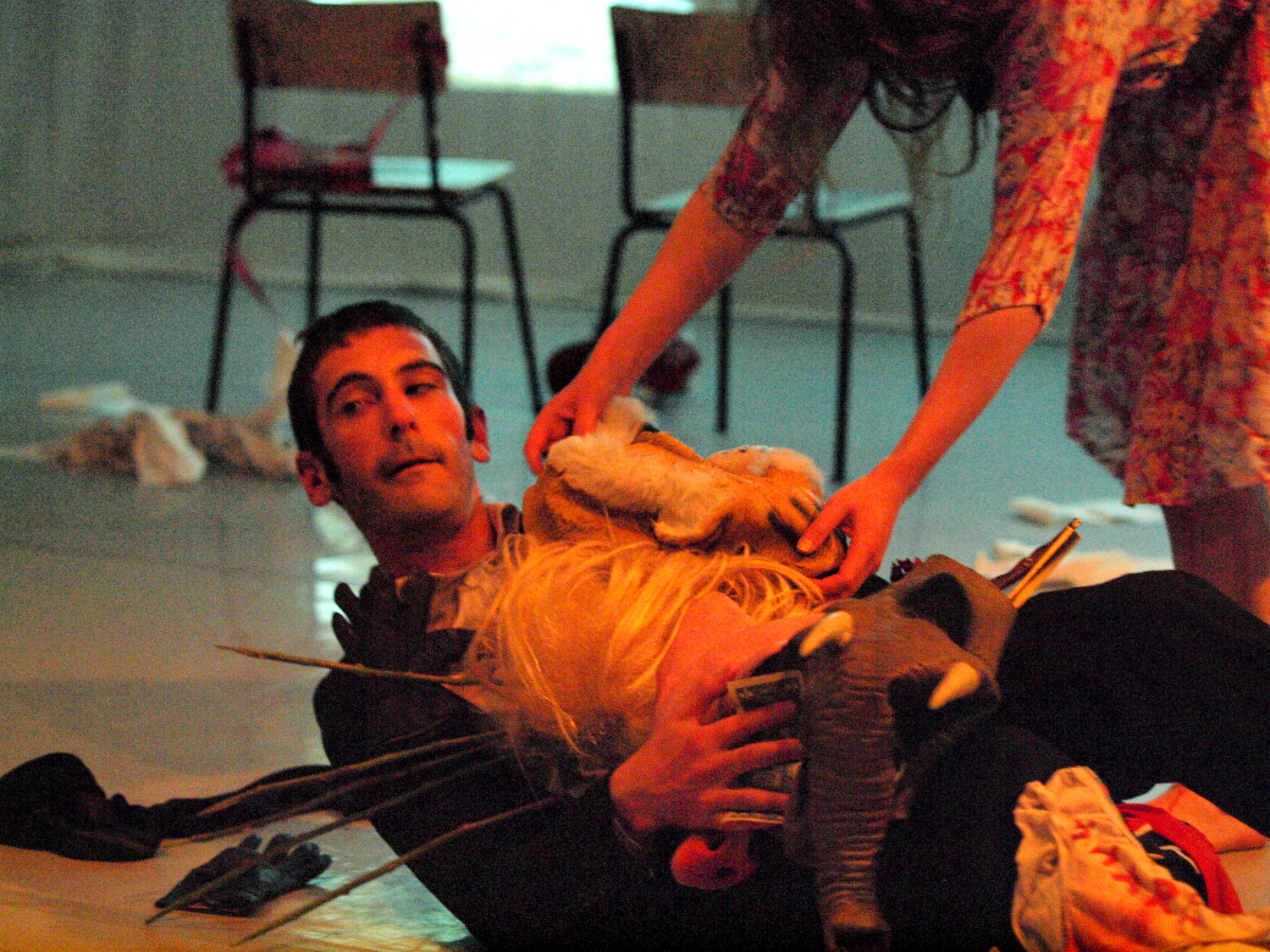
EXTRAORDINARY ALIENS by Alexa Wilson & Cohotography by johnicon, VG-Bild-Kunst, Bonn

EXTRAORDINARY ALIENS by Alexa Wilson & Co, photography by johnicon, VG-Bild-Kunst, Bonn

News of the Wrestling Woman

Coming from Hamburg I meet Alexa Wilson again, which I met at the Schaubude at the Hamburger Dom – an annual fun-fair – in March (–> see article in this blog). In company with Dave Hall and Teresa Peters she showed Extraordinary Aliens, which actually was the final performance of MPA-B. The stage was a screen showing excerpts of a traveler’s video, which documented stereotypes of hippies playing in deserts and on beaches cut with encounters of outsiders leading miserable lives marginalized in cities.

EXTRAORDINARY ALIENS by Alexa Wilson & Co Photography by johnicon, VG-Bild-Kunst, Bonn

EXTRAORDINARY ALIENS by Alexa Wilson & Co
Photography by johnicon, VG-Bild-Kunst, Bonn

A plastic-sac containing masks and rudiments which you can find as debris of flea markets was emptied on the floor to provide the performers with costumes, requisites, masks, etc. Elements of dance, theatre, screening, sport, game and disguising communicated feelings like loneliness, desperation and joy and conveyed elements of companionship, solidarity, fighting or tenderness to endure the marginal situation of a traveling performance artist, which nowadays comes close to the situation of vagabonds and players in feudal times when even medical doctors had to perform as healers at markets and fairs to self-promote and practicing their competence and skills.